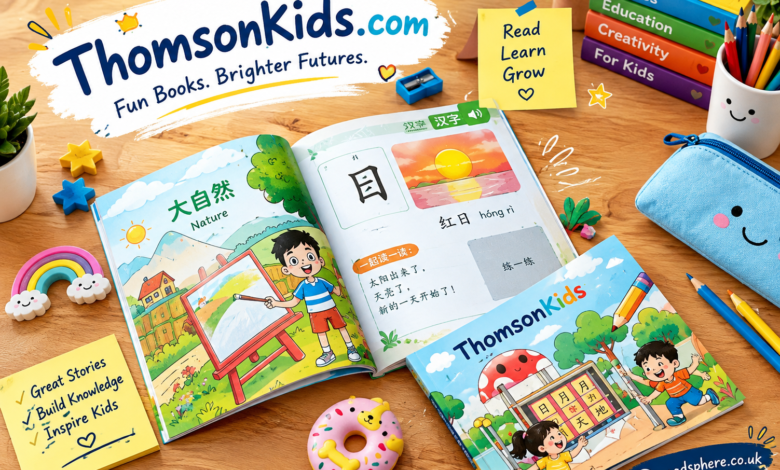
ThomsonKids.com is a search term that may interest parents, caregivers, educators, and readers looking for information related to children. When exploring a website with a name like ThomsonKids.com, visitors may want to understand its purpose, the type of content it offers, and whether it provides useful resources for families. Knowing what a website actually does can help readers decide whether it meets their needs.
In today’s digital world, parents often turn to the internet for information about children’s learning, development, activities, and everyday challenges. Websites focused on children can make it easier to discover educational ideas, family-friendly resources, and practical guidance. However, it is important to distinguish between general information about children’s interests and verified details about a particular website.
This guide explores ThomsonKids.com as a search topic, explains what readers should look for when researching the domain, and discusses how to evaluate the usefulness, reliability, and safety of websites intended for children and families. Because the website’s specific features and ownership cannot be confirmed here, the article avoids presenting unverified details as established facts.
What Is ThomsonKids.com?
ThomsonKids.com is a domain name that people may search for when trying to discover a website associated with children or family-related information. The name combines the term “Thomson” with “Kids,” suggesting a possible connection to children’s content. However, a domain name alone does not establish what a website offers or who operates it.
Before deciding whether the website is relevant to their interests, visitors should examine its actual content. The homepage, navigation menu, and available pages can help explain whether the site focuses on education, entertainment, parenting information, children’s products, or another subject. These details are more reliable indicators of its purpose than its name alone.
It is also important to distinguish between a website’s intended audience and its verified services. A domain containing the word “Kids” does not automatically mean that it provides educational materials or child-safe activities. Readers should review the available information before making assumptions about its features, credibility, or suitability for younger users.
Why Are People Searching for ThomsonKids.com?
People search for unfamiliar domain names for several reasons. They may have encountered a website through a search engine, received its address from another person, or noticed the name in an online discussion. Their main goal is often to understand what the website is and whether it is worth visiting.
Another common reason is the desire to verify a website before interacting with it. Parents may want to know whether a site contains suitable material for children, while general readers may simply be curious about its purpose. Understanding a website before using it is a sensible approach, particularly when personal information or online accounts could be involved.
Searchers may also want to determine whether a domain is active, trustworthy, or connected to a recognized organization. These questions require evidence from the website itself and, when available, reliable independent sources. Without that evidence, it would be misleading to claim that ThomsonKids.com has a particular reputation, audience size, or set of services.
How to Explore ThomsonKids.com
The first step when researching ThomsonKids.com is to enter the domain carefully into a web browser. Check whether a page loads successfully and whether the address matches the intended website. A website that does not open may be temporarily unavailable, inactive, or affected by a technical problem, so one unsuccessful visit is not enough to establish its status.
Once the website opens, look for basic navigation elements. An About page, Contact page, privacy policy, or other informational section may explain the site’s purpose and identify the organization responsible for its content. These pages can provide useful context, although their presence alone does not guarantee that every claim is accurate.
Next, review the available content and consider whether it answers your questions. Look for clear descriptions, consistent information, working navigation, and reasonable explanations of any services offered. If important details are missing or the website makes claims that cannot be checked, approach those claims cautiously rather than assuming they are correct.
Possible Areas of Interest for a Website With a Children’s Focus
Websites designed for children and families can cover many different subjects. These may include educational activities, reading suggestions, creative projects, parenting resources, or information about childhood development. However, these are general examples of children’s website content, not confirmed features of ThomsonKids.com.
Educational resources are one area that parents and teachers commonly seek online. Helpful educational websites may provide age-appropriate reading exercises, basic mathematics activities, language-learning materials, or ideas for developing problem-solving skills. When evaluating such resources, readers should consider whether the information is understandable, suitable for the intended age group, and consistent with reliable educational guidance.
Creative and family-oriented content can also be useful. Art projects, storytelling activities, puzzles, and indoor games may encourage children to explore their interests away from passive screen time. A well-designed resource should explain activities clearly and identify any materials or adult supervision required.
Family information is another possible area of interest. Parents often look for practical ideas related to routines, communication, and supporting children’s learning at home. Regardless of a website’s subject, readers should confirm its actual focus before treating any of these categories as part of its offering.
Is ThomsonKids.com Safe and Trustworthy?
Website safety is an important consideration, especially when children may use a site directly. Before trusting ThomsonKids.com, visitors should examine its security, transparency, and handling of personal information. The domain name by itself cannot establish whether the website is safe or trustworthy.
Start by checking whether the browser connection uses HTTPS. This helps protect information exchanged with the website, but it does not prove that the operator is legitimate or that the content is accurate. Visitors should also look for suspicious pop-ups, unexpected redirects, misleading download prompts, and requests for unnecessary personal details.
Privacy deserves particular attention when a website may appeal to children. Review its privacy policy to understand what information it collects, why it collects that information, and whether it explains how data is stored or shared. Avoid providing children’s names, addresses, photographs, school details, or other sensitive information unless there is a clear and appropriate reason.
Parents should also consider the site’s content and interactive features. Chat rooms, public profiles, advertising, and external links may introduce risks that are not obvious from the homepage. If the website’s ownership, purpose, or privacy practices remain unclear, it is better to limit interaction until more reliable information becomes available.
Benefits of Researching a Website Before Using It
Taking a few minutes to investigate a website can help visitors make better decisions. Instead of relying on a name or a short description, readers can evaluate the available evidence and determine whether the site is relevant to their needs. This approach is useful for parents, students, educators, and general internet users.
One major benefit is improved information quality. A website that clearly identifies its purpose and provides understandable, consistent information is easier to evaluate than one with vague descriptions or unsupported claims. Readers can also compare its content with information from recognized organizations when accuracy matters.
Another benefit is better privacy awareness. Understanding a site’s data practices before registering or submitting information can help users avoid unnecessary exposure. This is especially important when a website is intended for children or encourages visitors to create accounts.
Finally, website research encourages more responsible internet use. Rather than assuming that every search result is reliable, users learn to check details, recognize warning signs, and distinguish verified information from speculation. These habits are valuable when exploring unfamiliar domains, including ThomsonKids.com.
How ThomsonKids.com Can Be Evaluated by Parents and Readers
A practical evaluation begins with the website’s purpose. Ask whether the content clearly explains what visitors can expect and whether the available pages support that description. If the website presents educational information, for example, readers should look for clear explanations and sources where appropriate.
The next consideration is usability. A helpful website should be reasonably easy to navigate, readable on different devices, and organized in a way that allows visitors to find information without confusion. Broken links, excessive advertisements, or repeated redirects may reduce the user experience and deserve further attention.
Accuracy and transparency are equally important. Look for identifiable authors or an organization responsible for the material, publication dates when relevant, and contact information that appears credible. Not every useful website provides every detail, but a lack of basic transparency can make it harder to assess reliability.
Parents should complete the evaluation by considering age suitability and privacy. If children will access the website, review its pages first and supervise their use when appropriate. These checks provide a practical basis for deciding whether the website is suitable, without relying on assumptions about its name.
Frequently Asked Questions About ThomsonKids.com
What is ThomsonKids.com?
ThomsonKids.com is a domain name that may attract people looking for information connected to children. Its exact purpose and services should be confirmed by reviewing the live website and reliable supporting information.
Is ThomsonKids.com an educational website?
Its educational focus cannot be confirmed from the domain name alone. Visitors should examine the site’s actual pages to determine whether it provides learning materials, educational activities, or another type of content.
Is ThomsonKids.com safe for children?
Its safety has not been independently established here. Parents should check its content, privacy policy, security indicators, and interactive features before allowing children to use it.
Does ThomsonKids.com require registration?
Registration requirements cannot be confirmed without checking the website directly. If an account is required, review the information requested and the site’s privacy practices before signing up.
How can I check whether ThomsonKids.com is legitimate?
Review its About and Contact pages, privacy policy, website security, and available independent references. Be cautious if it makes unsupported claims or requests sensitive information without a clear reason.
Can parents use ThomsonKids.com for children’s activities?
That depends on the content the website actually provides. Parents should inspect its resources and determine whether they are appropriate for their children’s ages, interests, and needs.
Conclusion
ThomsonKids.com is a domain worth examining carefully if you have encountered it while searching for children’s or family-related information. However, its name alone does not confirm its purpose, ownership, educational value, or safety. Readers should verify these details before relying on the website.
A careful review of its content, privacy practices, transparency, and usability can help determine whether it meets your expectations. Parents should take additional care before allowing children to interact with unfamiliar websites or share personal information online.
Ultimately, the best way to understand ThomsonKids.com is to evaluate the evidence available rather than rely on assumptions. By checking the website directly and applying sensible online safety practices, visitors can make a more informed decision about whether it is useful and appropriate for their needs.